Defined a scalable investing platform strategy that unified fragmented experiences into a cohesive investor ecosystem
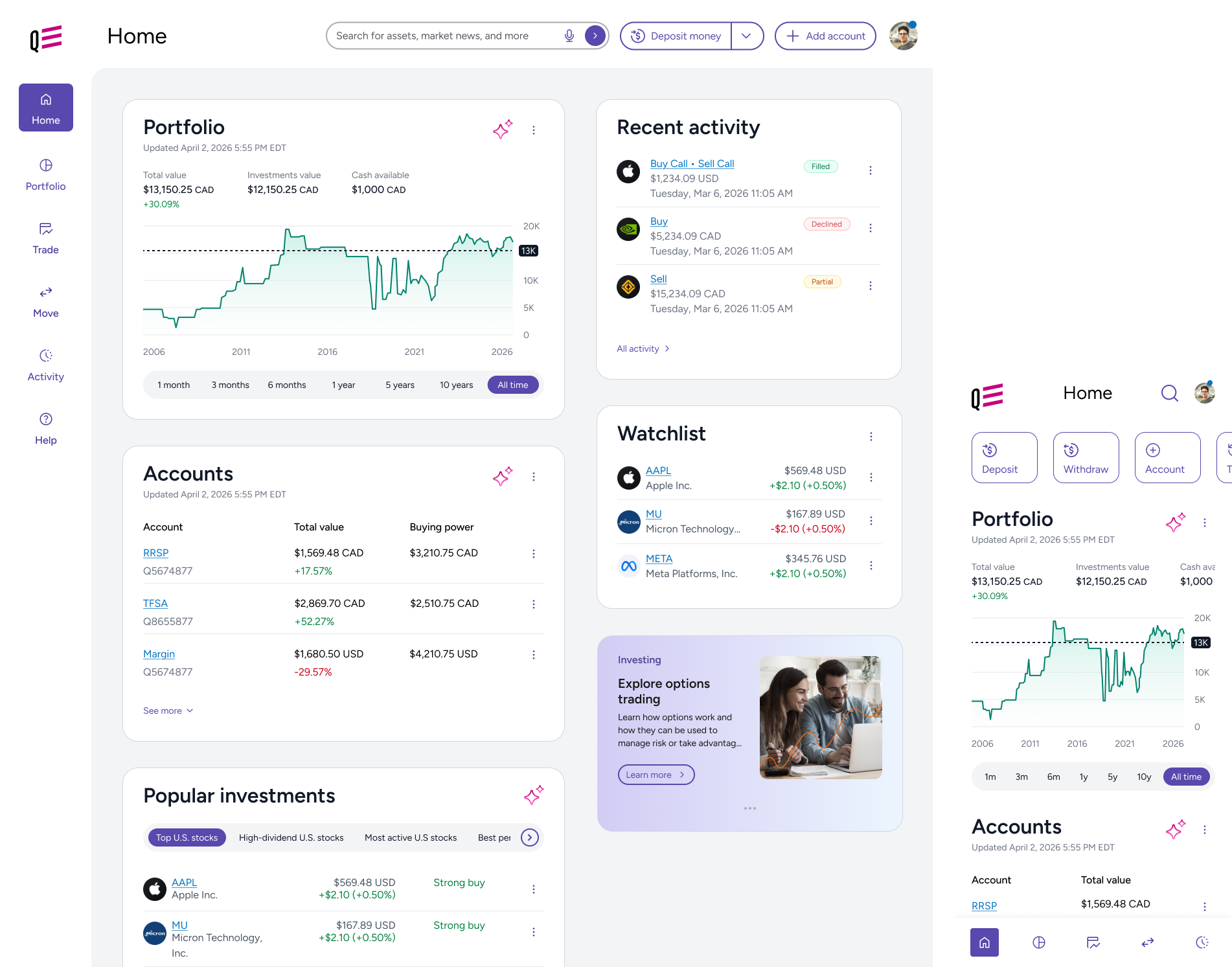
A growing platform with disconnected capabilities
Over time, Qtrade's investing platform expanded through the addition of new products, research tools, third-party integrations, account services, and operational capabilities.
Each capability delivered value independently. Investors could research securities, screen investments, monitor portfolios, fund accounts, access market news, review analyst reports, and place trades.
However, the overall experience had become increasingly fragmented.
- Research lived in one area of the platform
- Market data lived somewhere else
- Funding and account activity were separated from investing workflows
- Portfolio management, education, and trading were not always connected around investor goals
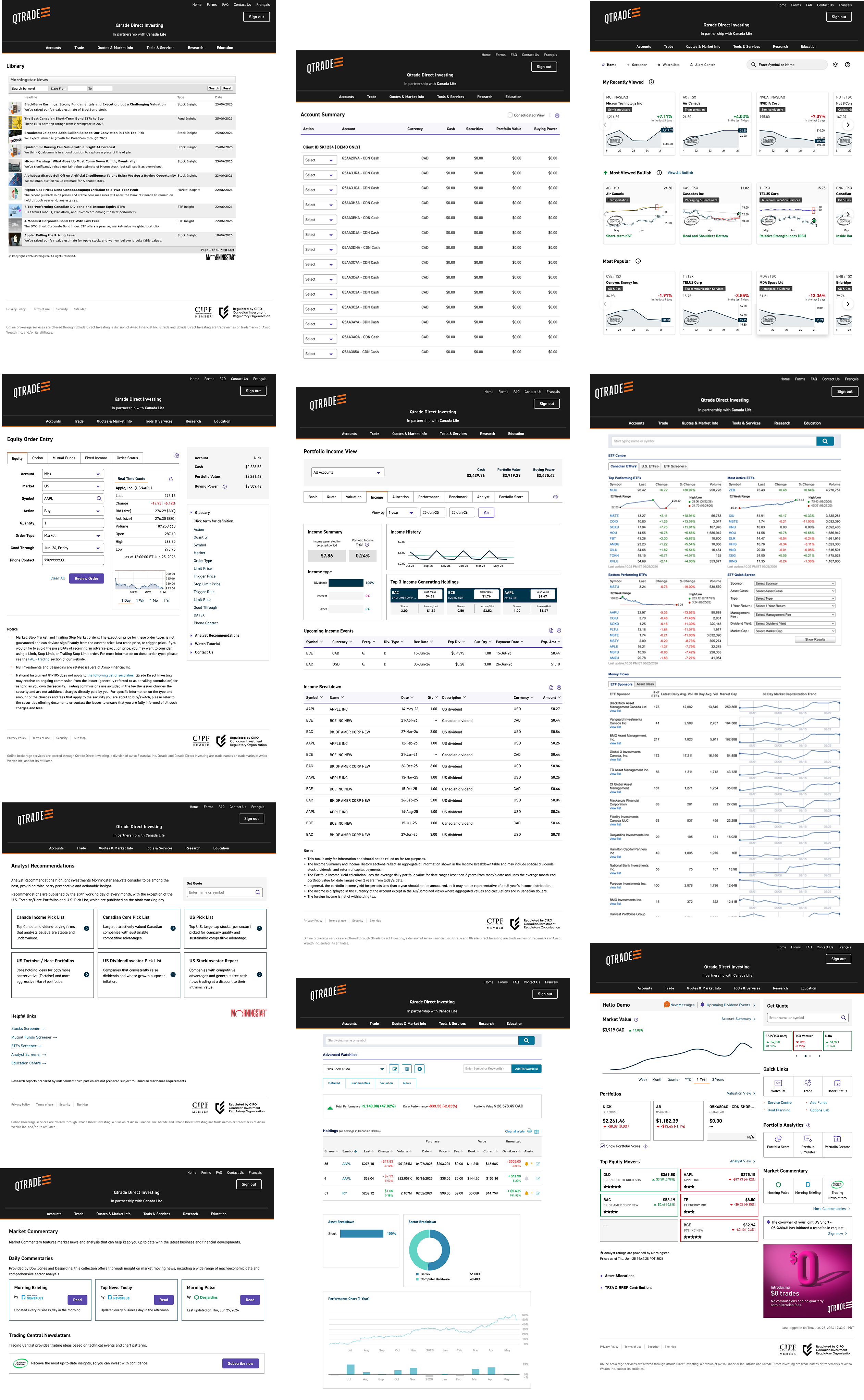
Existing capabilities existed across multiple areas of the platform, forcing investors to piece together information and workflows themselves.
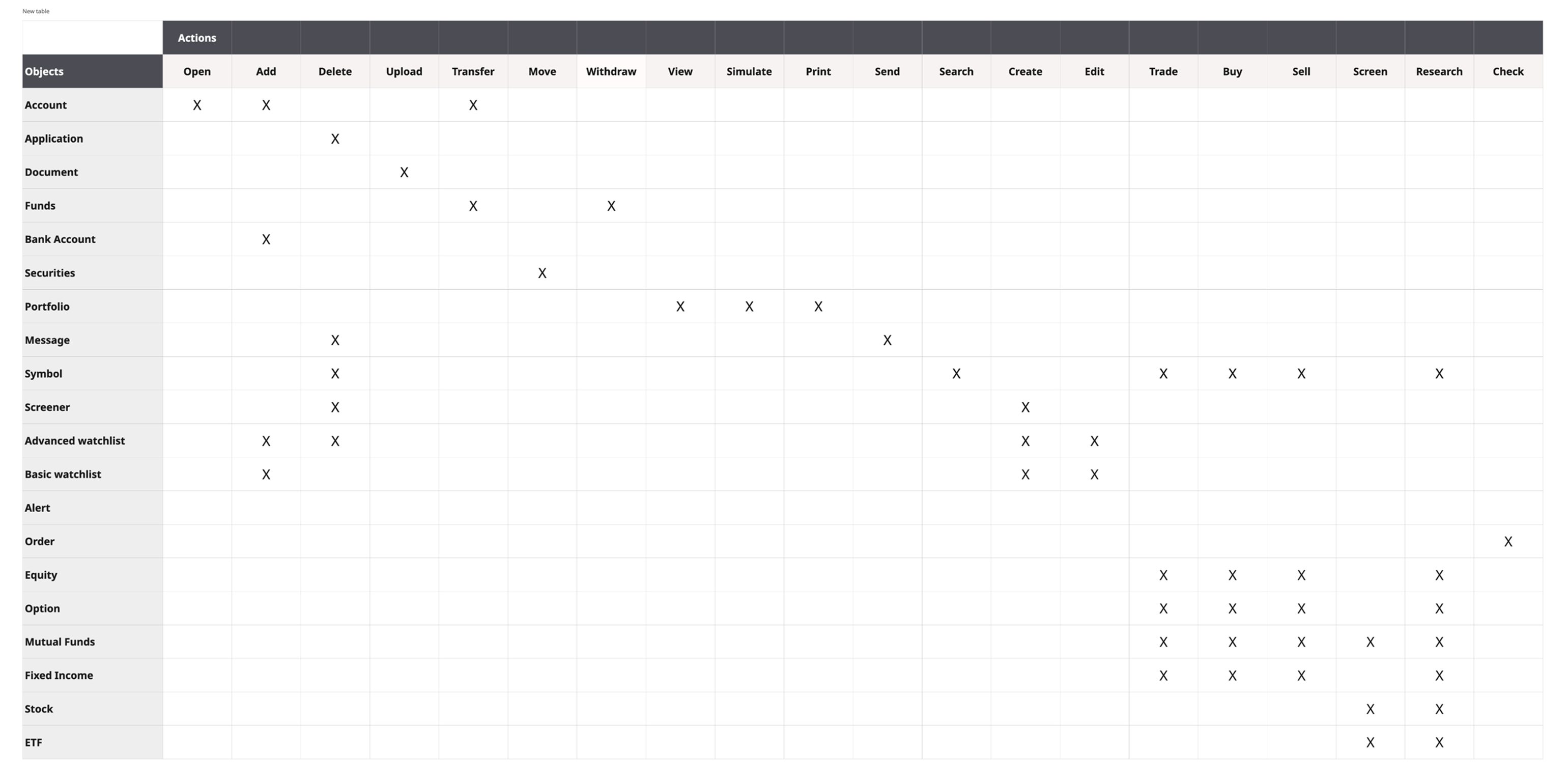
Mapping the platform through objects, actions, and attributes helped identify why users experienced unnecessary cognitive load and inconsistent interactions.
As a result, investors often needed to navigate between multiple areas of the platform to complete a single goal.
A user researching an investment might need to move between market data, analyst reports, screeners, educational content, portfolio information, and trading tools before feeling confident enough to act.
As new capabilities continued to be added, the platform faced an important strategic challenge: how should the investing experience evolve so investors can move more easily from information to understanding, and from understanding to action?
Objective
- Reduce fragmentation across investing workflows
- Create clear paths between research, education, portfolio management, funding, and trading
- Improve investor confidence during decision-making
- Establish a scalable platform structure capable of supporting future personalization and AI-assisted experiences
- Create a shared strategic direction for future product evolution
My role
I led the development of:
- The platform vision
- Interaction framework
- Information architecture concepts
- Behavioral models
- Future-state experience strategy
This work involved:
- Systems analysis
- Workflow modeling
- Platform architecture
- Experience strategy
- Information architecture
- Interaction design
- User interface design
- AI-assisted experience exploration
- Executive-level vision communication
Understanding the real problem
Most investing platforms are organized around capabilities.
- Trading
- Research
- Funding
- Portfolio management
- Activity
- Education
While this structure often makes sense internally, it does not necessarily reflect how investors think.
Investors are not trying to complete a "research workflow" or a "trading workflow." They are trying to answer questions.
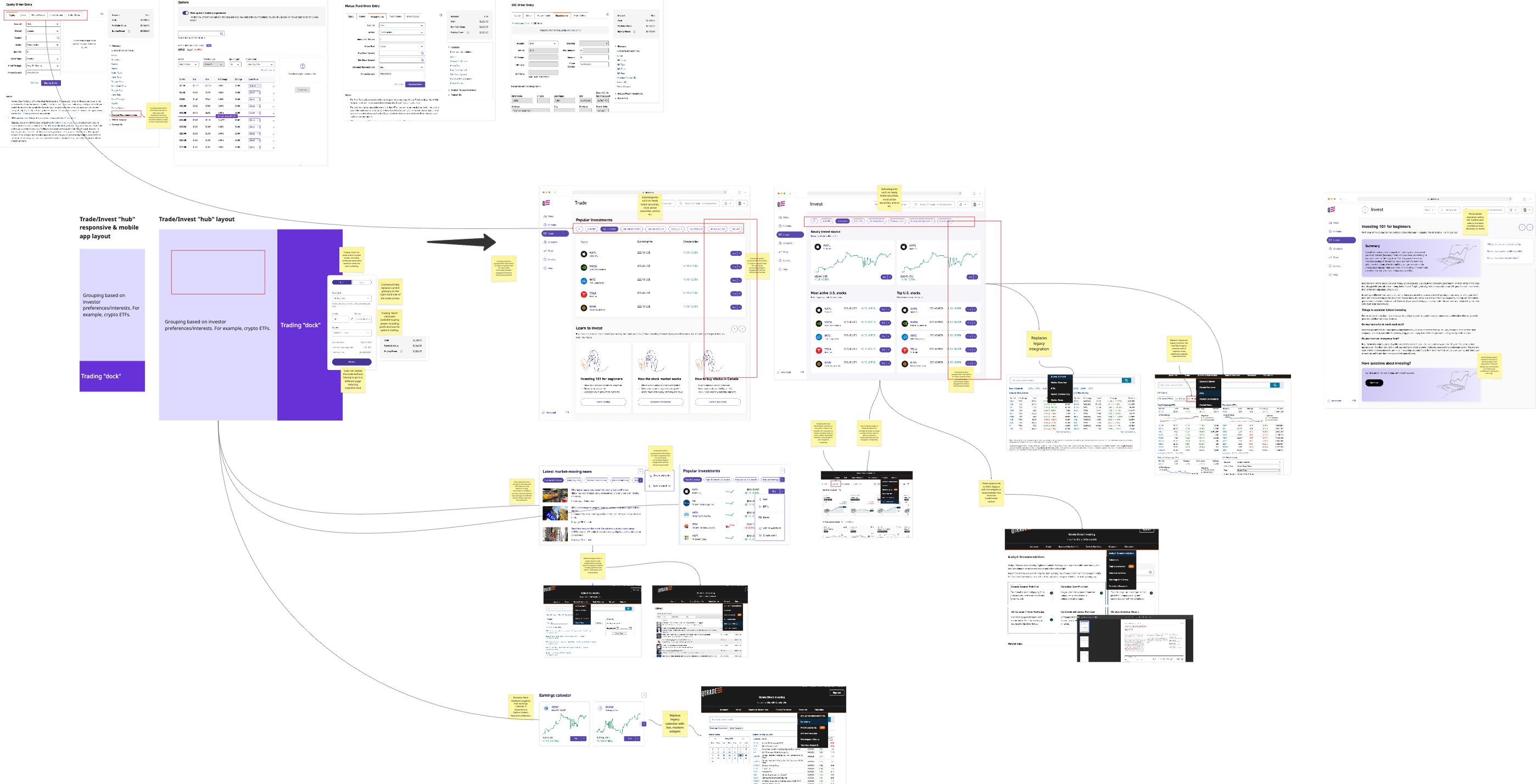
Making sense of a fragmented ecosystem. Rather than treating each capability independently, I mapped relationships across products, workflows, and investor goals to uncover opportunities for a more cohesive platform.
- Should I invest in this security?
- How is my portfolio performing?
- Do I have enough cash available?
- What changed since my last visit?
- What should I do next?
To answer those questions, investors often need information from multiple parts of the platform.
The burden of connecting those pieces falls on the user. The more fragmented the platform becomes, the more effort investors must spend assembling their own understanding before they can make a decision.
The problem was not a lack of features. The problem was helping investors connect those features into a cohesive experience.
Identifying the opportunity
As I analyzed existing workflows, a pattern emerged. Many of the platform's capabilities contained valuable information, but they operated largely as independent systems.
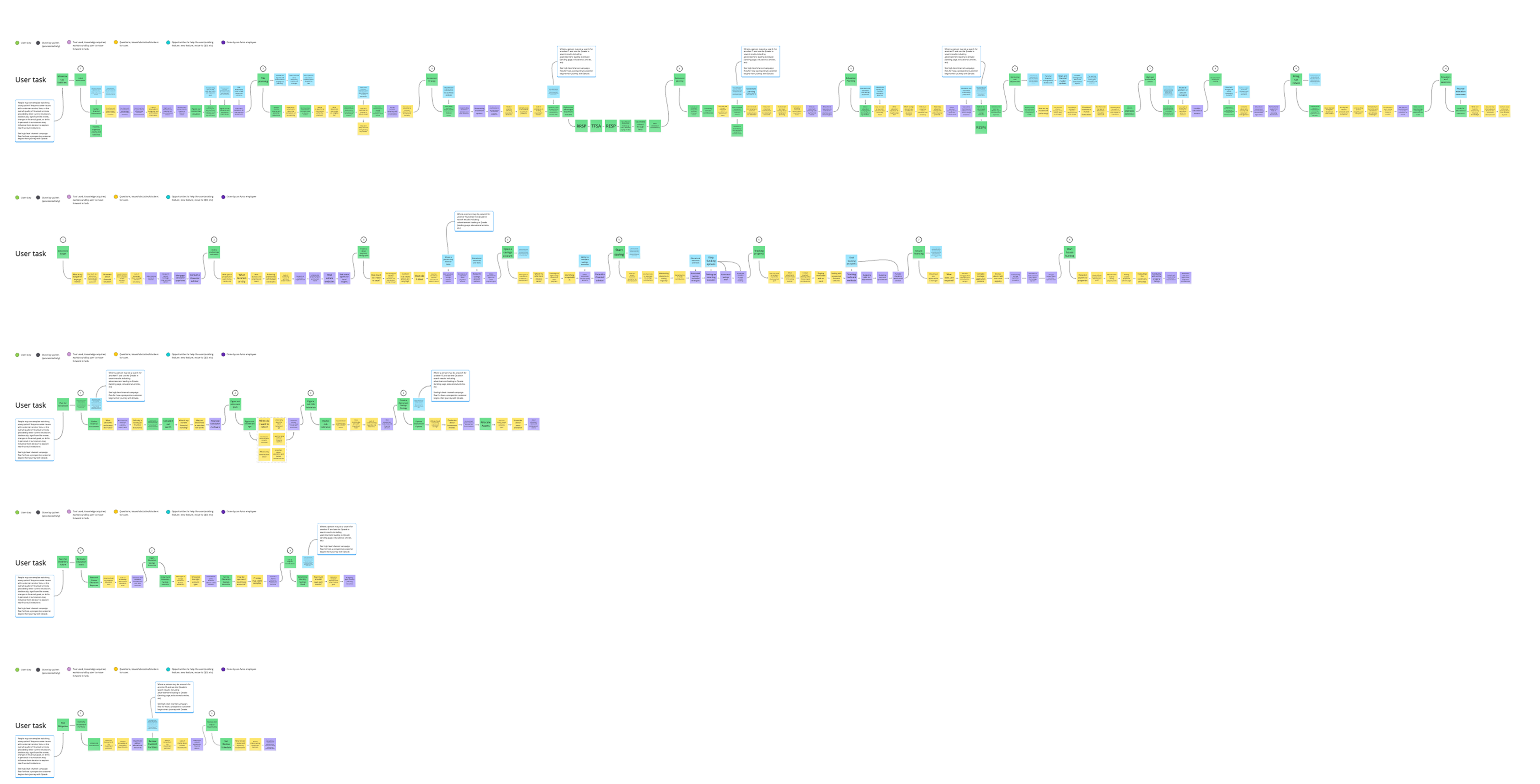
Existing workflows revealed repeated navigation, duplicated decisions, and fragmented pathways across core investing tasks.
Rather than thinking about the future of the platform as a collection of additional features, I began exploring how those capabilities could work together as part of a larger investor experience.
This shifted the conversation from:
- What features should we add next?
to:
- How should the platform evolve to better support investor decision-making?
That distinction became the foundation for the vision.
Creating a framework for investor confidence
Investing is ultimately a decision-making activity.
The role of the platform is not simply to provide information. Its role is to help investors understand information well enough to make informed decisions.
Through this lens, I developed a behavioral framework centered around investor confidence.
The framework identified four interconnected activities:
- Understanding: Helping investors interpret market conditions, portfolio performance, opportunities, and risks
- Guidance: Providing relevant context, education, and support at decision points
- Action: Enabling investors to execute decisions efficiently and confidently
- Learning: Helping investors understand outcomes and improve future decision-making
Rather than treating confidence as an outcome of a single interaction, the model viewed confidence as a continuous system supported by the platform.
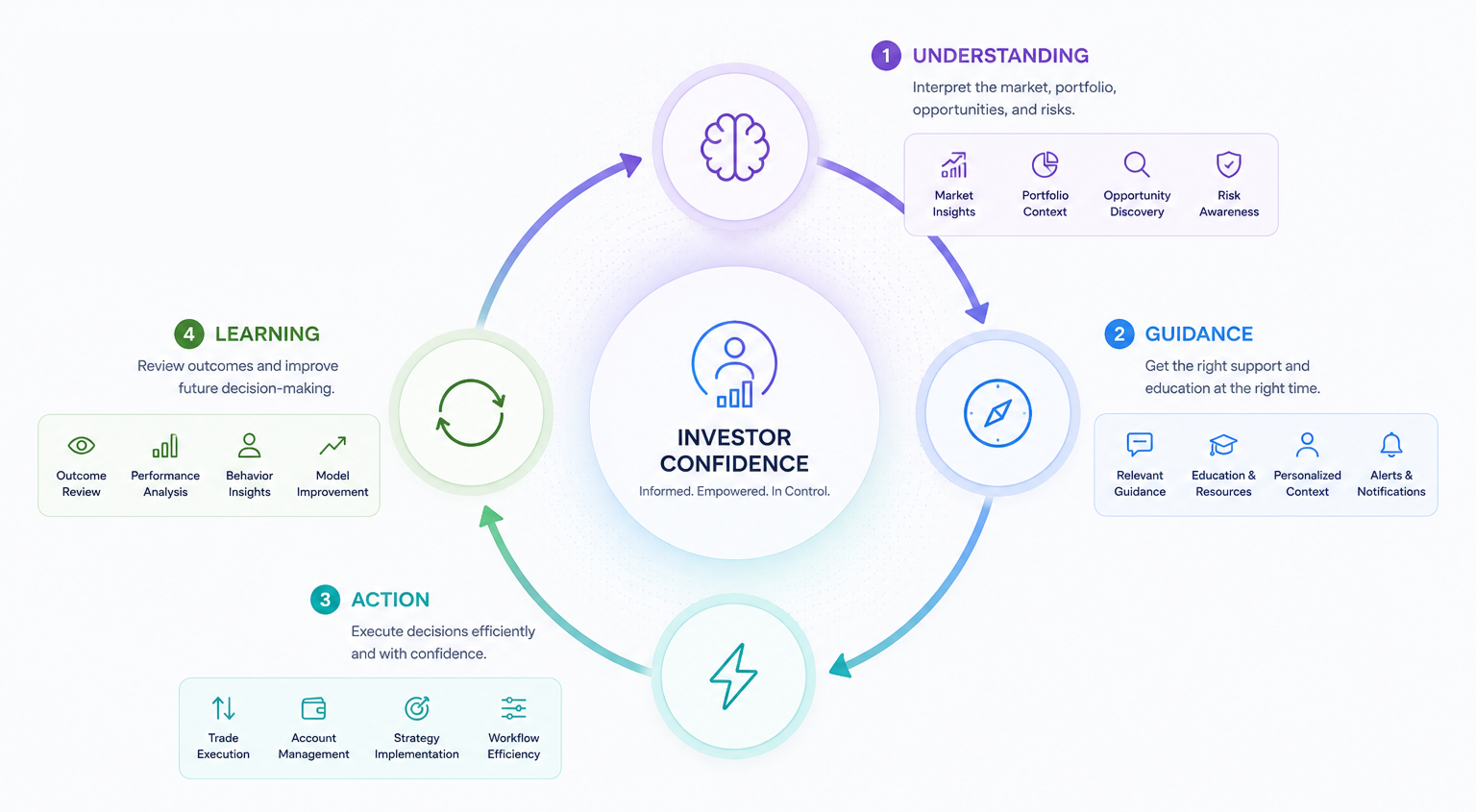
The framework shifts the platform’s role from delivering information to supporting investor decision-making. Confidence becomes an ongoing system built through understanding, guidance, action, and continuous learning.
Building a scalable interaction framework
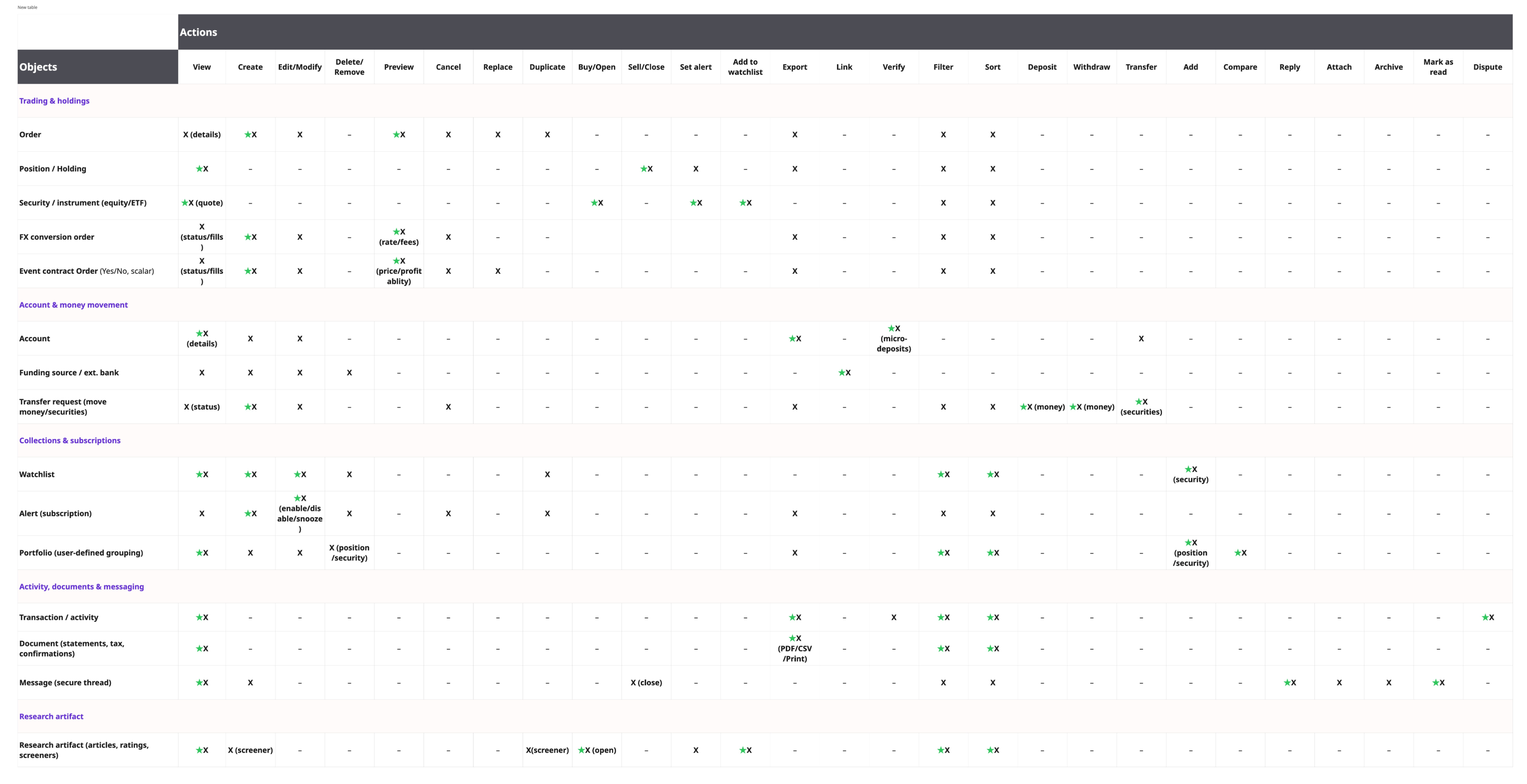
Building an object-action-attribute framework established a reusable interaction architecture that reduced design complexity, improved consistency, and created a foundation for future platform capabilities.
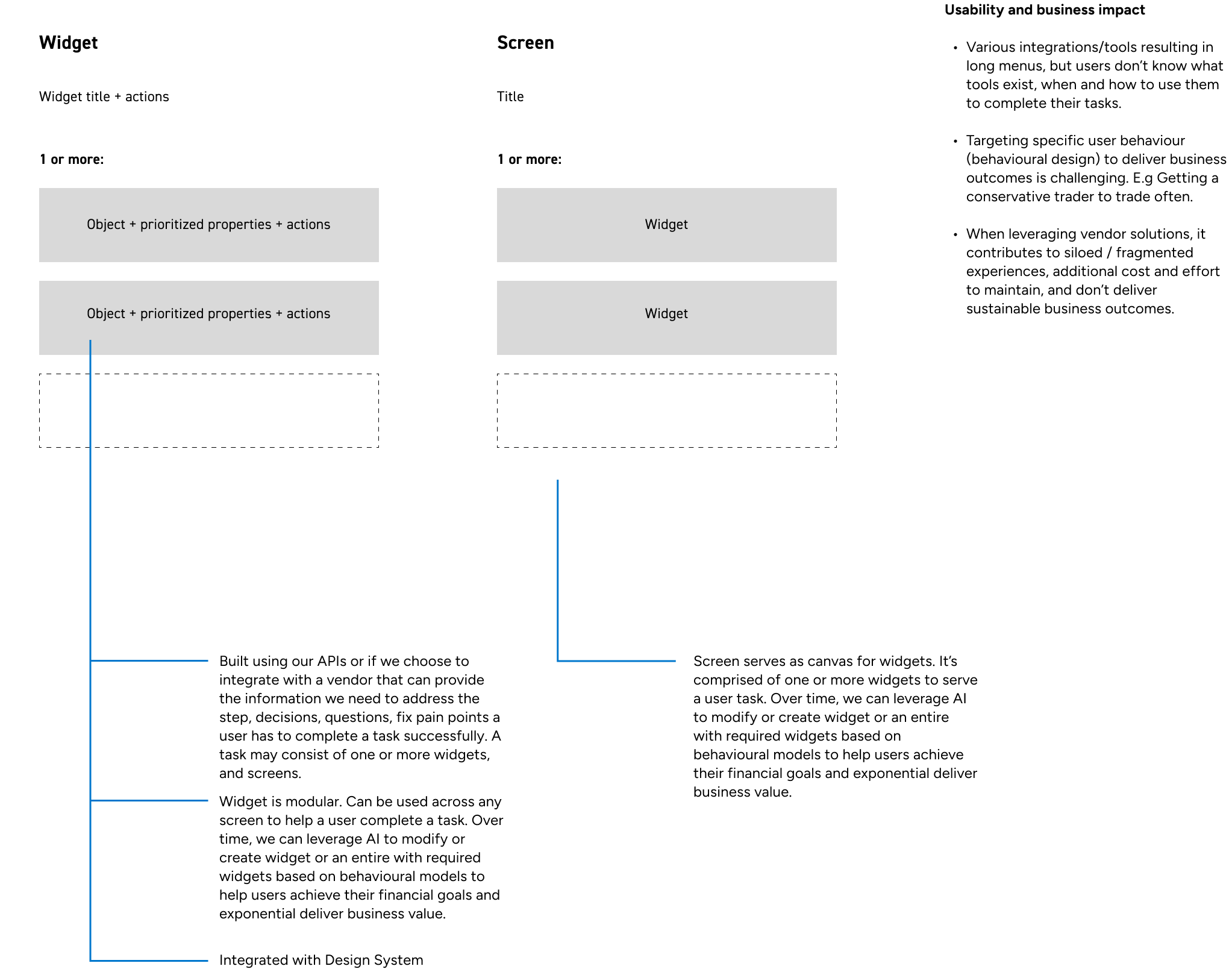
Reducing complexity through reusable interaction primitives. A common object-action-attribute model made it possible to scale consistent interactions across future products.
To support long-term flexibility, I explored a reusable interaction model built around three core concepts.
- Objects: The entities investors care about, such as accounts, portfolios, securities, activities, and goals
- Actions: The tasks investors perform, such as trade, deposit, transfer, analyze, and review
- Attributes: The information used to support decisions, such as performance, risk, income, holdings, and market signals
This framework created a consistent structure that could scale across different experiences while reducing complexity for both users and product teams.
It also provided a foundation for a more modular platform model. Widgets could combine objects, actions, and attributes into reusable containers that serve specific investor goals, decision points, or workflow needs.
For example, a portfolio widget could show total value, investment value, available cash, performance, income, and contextual actions. An account widget could show account-specific status, balances, and actions such as deposit, trade, or review performance.
By treating pages as compositions of reusable, goal-oriented widgets, the platform could evolve beyond static navigation toward more adaptive experiences.
Reimagining the platform structure
The next challenge was determining how the platform itself should evolve.
Rather than organizing experiences around disconnected capabilities, I explored a model organized around investor goals and common workflows.
The resulting concept introduced several integrated destination areas.
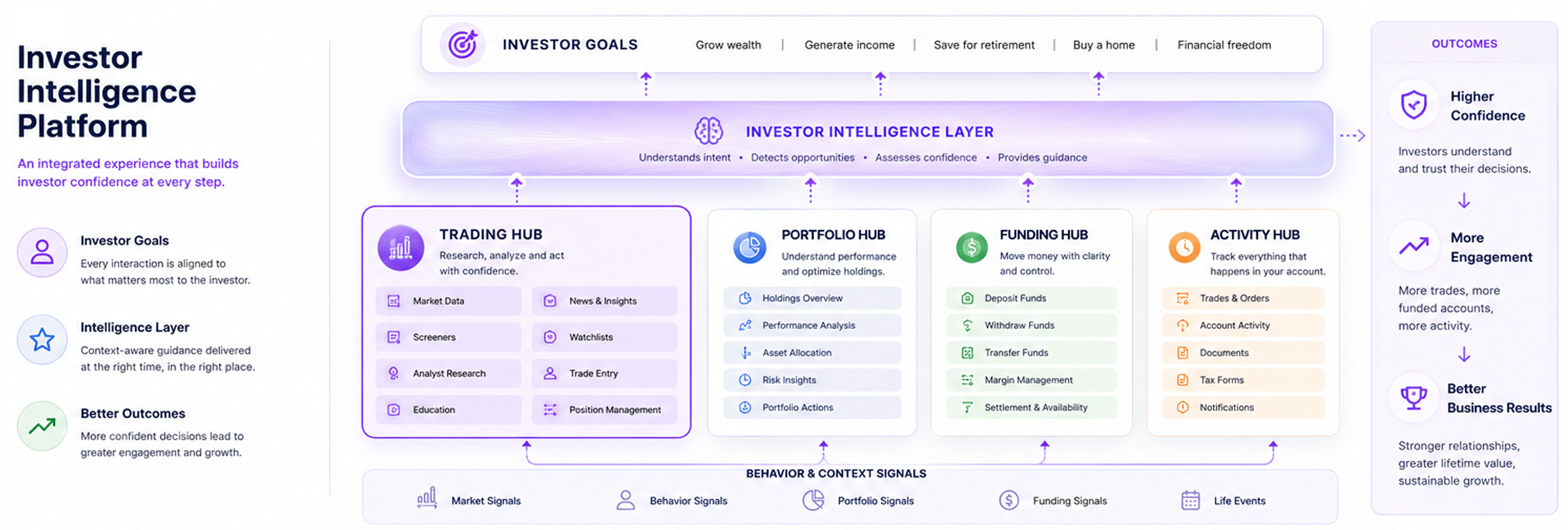
Reimagining the platform around goal-oriented hubs transformed fragmented capabilities into a cohesive experience, strengthening the relationship between information, guidance, and action while creating a foundation for future AI-assisted tasks.
Trading Hub
A unified environment that brings together market data, research, educational resources, portfolio context, and trade execution.
Portfolio Hub
A clearer view of performance, holdings, income, and portfolio health designed to answer a simple question: "How am I doing?"
Funding Hub
A dedicated area focused on moving money, managing transfers, and tracking account funding activities.
Activity Hub
A centralized view of activity across the platform, bringing together trading activity, deposits, withdrawals, income events, transfers, and account changes.
This approach reduced the need for investors to navigate between disconnected areas while creating stronger relationships between information and action.
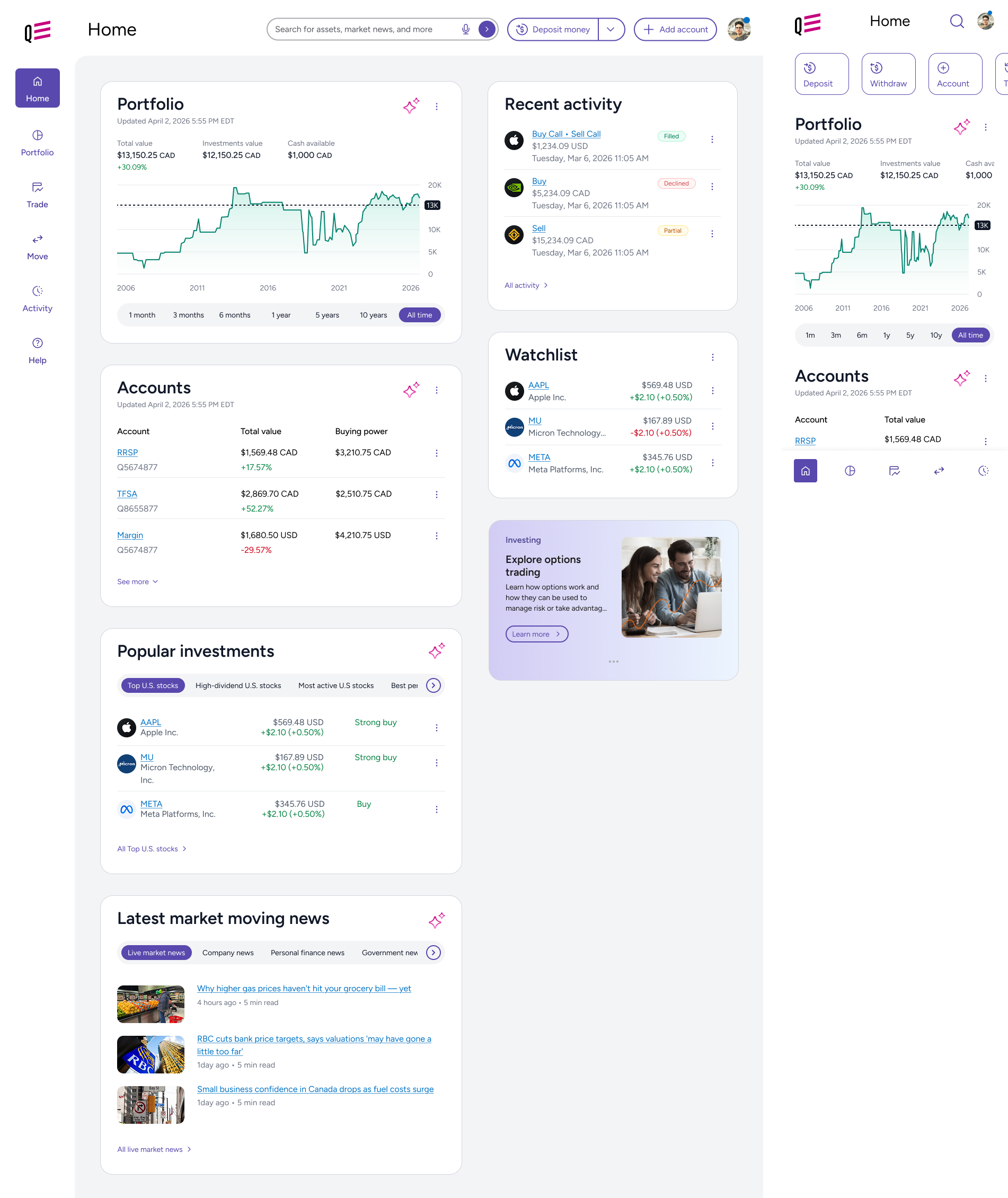
The Home Hub demonstrates how reusable widgets can combine portfolio context, market intelligence, and account activity into a cohesive experience that supports investor confidence from the moment they sign in.
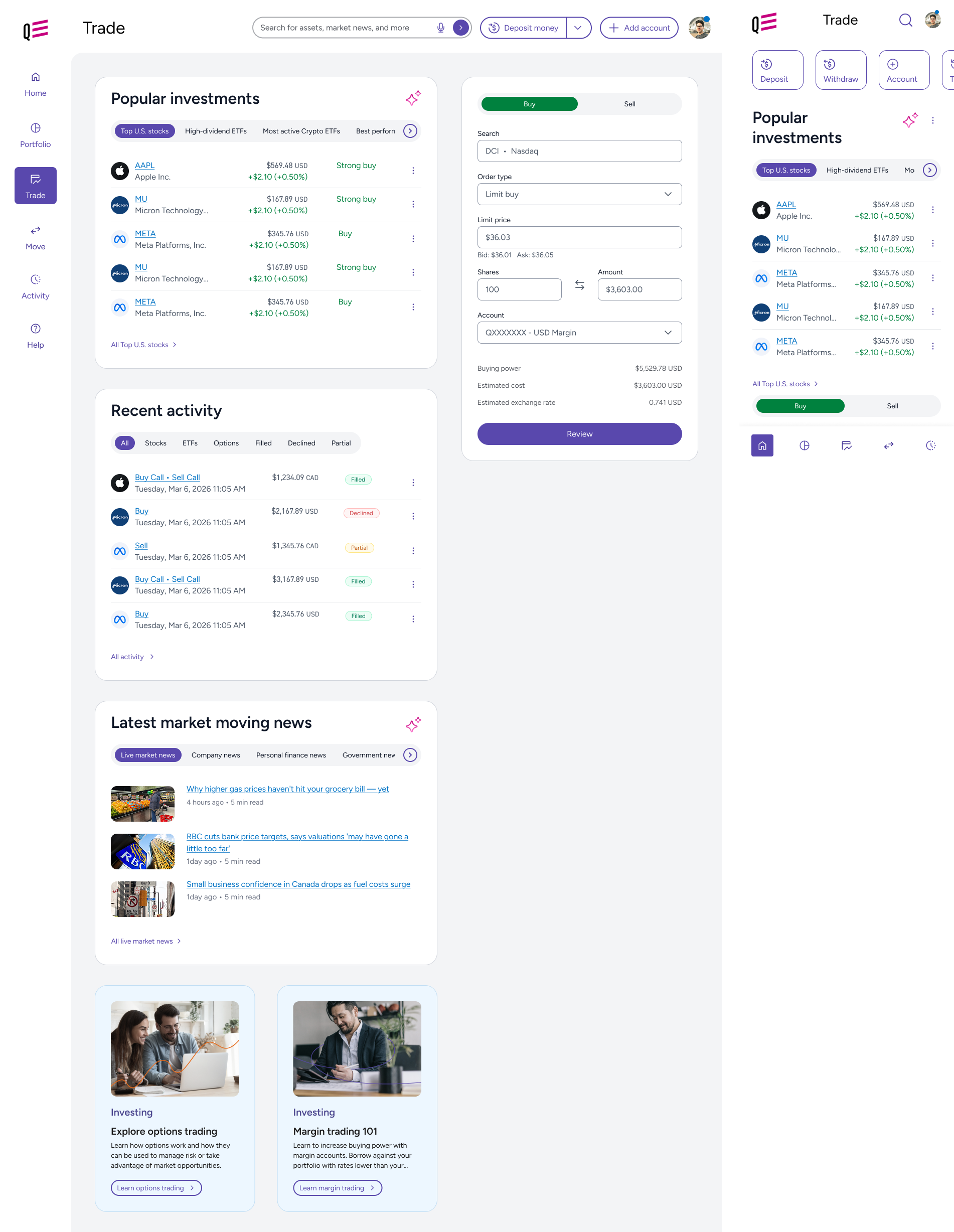
Rather than separating research from execution, the Trading Hub brings together the information investors need to evaluate opportunities, build confidence, and place trades within a unified workflow.
Designing the foundation for AI-assisted experiences
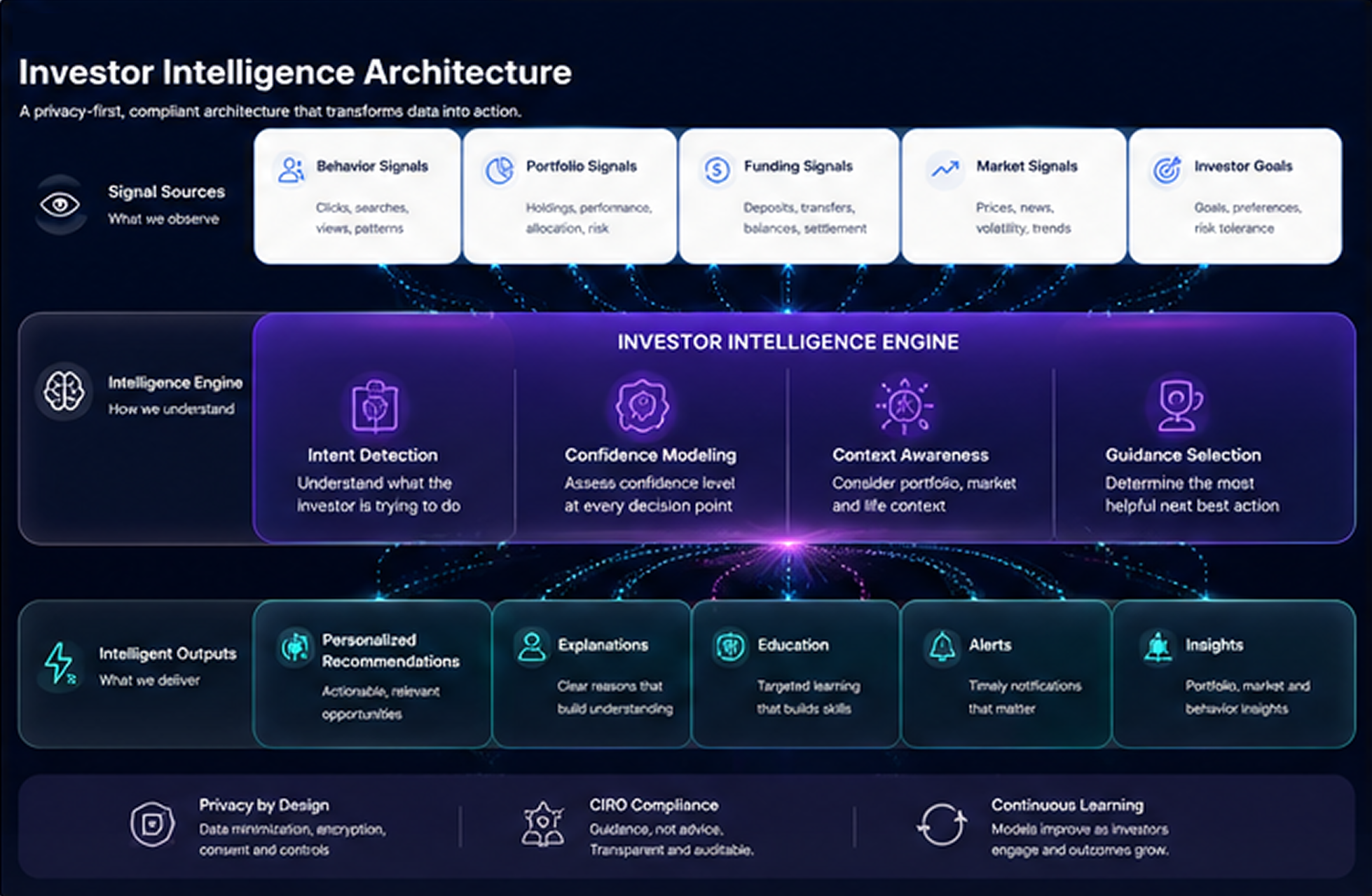
Rather than positioning AI as a standalone feature, this architecture illustrates how investor signals, platform context, and behavioral understanding could work together to deliver more relevant guidance, education, and decision support.
AI has the potential to make investing more approachable, but meaningful assistance depends on more than simply adding an intelligent interface. It requires a platform capable of understanding investor context, goals, behavior, and decision history.
As the platform vision evolved, I began exploring the architectural foundations needed to support future AI-assisted experiences. Rather than treating AI as a separate capability, I positioned it as an intelligence layer built upon reusable interaction models, behavioral signals, and investor context.
Within this model, AI becomes less about replacing investor judgment and more about strengthening it by helping investors better understand their options before making decisions.
The architecture explored how an intelligence layer could combine information from across the platform to provide:
- Context-aware guidance based on investor goals and current tasks
- Personalized education that adapts to an investor's experience and confidence
- Relevant opportunities surfaced from market activity, portfolio performance, and investor behavior
- Explainable recommendations that help investors understand why a suggestion is being made
- Decision support that reduces cognitive effort without removing investor control
This exploration also highlighted an important realization: effective AI depends on strong product foundations. Before intelligent guidance can become genuinely useful, the platform must first establish consistent interaction models, reusable information structures, behavioral instrumentation, and high-quality contextual data.
Rather than viewing AI as the starting point, this work positioned it as a natural evolution of a well-structured platform—one capable of continuously helping investors move from information, to understanding, to confident action.
Key design decisions and tradeoffs
- Platform vision over isolated feature design: Focused on how capabilities connect across the experience rather than improving screens independently
- Goal-based hubs over capability-based navigation: Organized the future platform around investor goals and common workflows instead of internal product categories
- Reusable interaction patterns over one-off solutions: Created a framework that could scale across trading, funding, portfolio, activity, and future personalization experiences
- AI as guidance over automation: Positioned AI as decision support that helps investors understand context rather than replacing investor judgment
- Strategic alignment over speculative execution: Used the vision to create shared language and direction before committing to detailed implementation
Outcome
This work established a future-state vision for how the Qtrade investing experience could evolve as new capabilities, personalization, and AI-assisted guidance are introduced.
The resulting framework:
- Created a shared language for discussing platform evolution
- Identified opportunities to reduce fragmentation across investing workflows
- Connected individual product initiatives to a broader platform strategy
- Established reusable interaction patterns capable of scaling across future capabilities
- Provided a foundation for future discussions around personalization and AI-assisted experiences
Most importantly, the work shifted the conversation away from individual features and toward a more holistic view of how investors experience the platform as a whole.
Reflection
One lesson has consistently emerged throughout my career across financial products, enterprise software, analytics platforms, and operational systems: complex products rarely struggle because they lack functionality.
They struggle because users are forced to bridge the gaps between that functionality themselves.
Whether the challenge involves investing, cybersecurity, analytics, or enterprise operations, the underlying problem is often the same: helping people understand what matters, what to do next, and why.
This project explored that challenge at a platform level, creating a framework for how the investing experience could evolve beyond disconnected tools toward a more cohesive system that supports investor confidence over time.
Back to top